
Peace and conflict
Strengthening Peace through Pluralism
With the global disruptions that have occurred in the past decade, the international community is more entrenched in long term conflicts than ever before.
Conflicts today have longer lasting effects on societies and divisive narratives and policies all contribute to this troubling context. Many of these conflicts stem from marginalization, exclusion, inequality – from negative responses to diversity in society.
More than ever, new approaches and tools of peacemaking are needed to address these challenges. Existing inclusion efforts are insufficient in scope and vision. There is a need for more fulsome change to peacemaking approaches. Pluralism offers a transformative approach, predicated on valuing diversity as a foundation for a more durable, lasting peace. Building peace agreements that lead to changes at the levels of ‘hardware’ (institutional change) and ‘software’ (change in perceptions and behaviour) will create more sustainable agreements and prevent future conflict.
A growing programming stream for the Centre, our work in this field focusses on supporting a wide range of peace practitioners and stakeholders to place pluralism at the centre of peace processes and conflict prevention efforts.
How we do it
Pluralism in Media and Conflict Resolution Initiatives co-created with local communities
South Sudan
In South Sudan, our efforts focus on enhancing media Pluralism and empowering local journalists and communicators to play a crucial role in conflict prevention and reconciliation. Through 2024, we successfully conducted two intensive training sessions, engaging over 30 journalists from diverse regions of the country. These sessions emphasized the importance of Pluralism in media and how media actors can actively contribute to mitigating conflicts and fostering reconciliation.
We developed the comprehensive toolkit “Media for Pluralism.” This resource provides a conceptual framework, insightful case studies, and practical guidance on the relevance of Pluralism in media work, particularly within the context of conflict. Our toolkit serves as a vital tool for journalists, enabling them to create unbiased, accurate, and fair content that helps reduce animosities among divided communities. Additionally, we have produced a video course based on this toolkit, further facilitating the adoption and integration of Pluralism into media programming.
Our work in South Sudan is conducted in collaboration with a USAID-funded consortium, partnering with local media organizations to ensure our initiatives are grounded in the realities and needs of the communities we serve.
Sudan
In Sudan, we support civil society organizations based in the region, including Uganda and Kenya. Our initiatives involve training and dialogue sessions that highlight the significance of Pluralism for civic participation. Many of our partners taking part in these initiatives focus on critical issues such as youth and women empowerment, as well as combating hate speech and misinformation. In 2024, we held a workshop in Kampala for Sudanese civil society leaders, addressing the polarization among civil society organizations and fostering dialogue and collaboration
We are also working closely with Sudanese media organizations, both within Sudan and in exile across East Africa. Our training programs incorporate insights from GCP’s Global Pluralism Monitor research, equipping media actors with the knowledge and skills necessary to navigate the challenges of armed conflict. Supporting Sudanese media actors in exile, we facilitate discussions about the war’s impact and the rise of divisive narratives, including hate speech.
Colombia
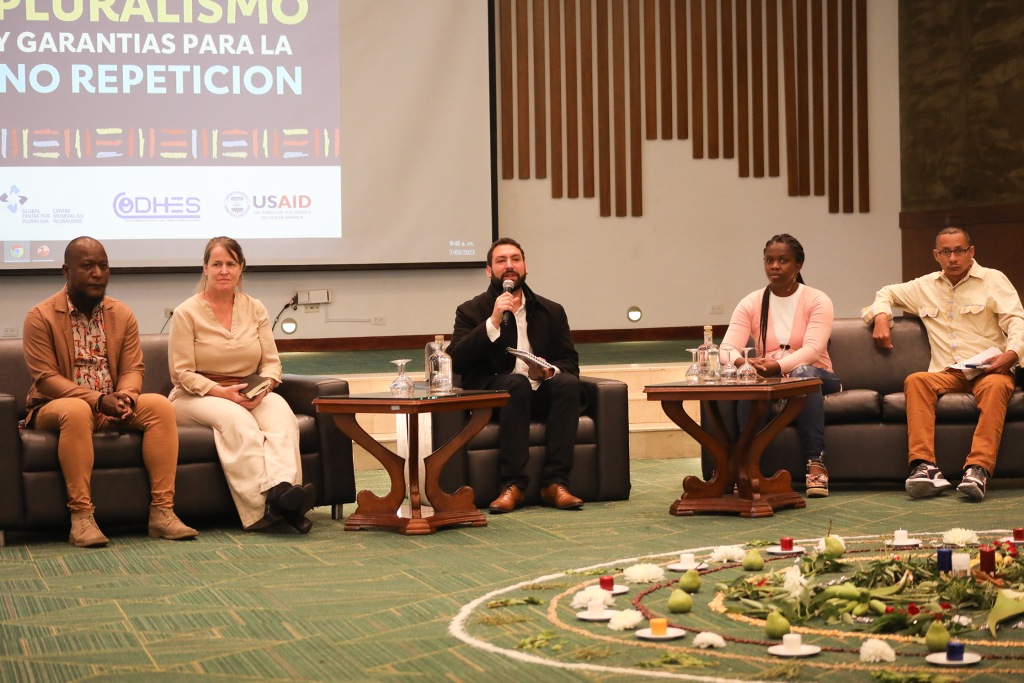
In Colombia, we work alongside a network of Indigenous and Afro-Colombian women-led organizations to monitor the implementation of the 2016 Peace Accords, specifically focusing on the Ethnic Chapter. Our partners have launched an innovative pilot project designed for grassroots-level engagement with communities on implementation of the peace agreement. This initiative emerged from an assessment of existing mechanisms, revealing a critical need for tools that actively engage marginalized communities and incorporate Indigenous perspectives. The second phase of this pilot is currently underway, targeting indigenous communities in the country’s Pacific region.
Afghanistan
In Afghanistan, we are collaborating with a local partner to conduct dialogues with rural communities regarding local dispute resolution processes. This project aims to strengthen local mechanisms for resolving conflicts, particularly those related to resources and land at the village level.
Through our work in these diverse regions, we aim to promote Pluralism and working together with communities to empower them to engage in constructive dialogue, so the voices of the ones in the margins have the same relevance in fostering peace and reconciliation in some of the world’s most challenging environments. We believe that by investing in local voices and enhancing the media and civil society’s role in conflict resolution, we can create a more inclusive and peaceful future.
Practitioner Resources & Papers
Our Foundational Paper
Pluralism and Peace Processes: An Overview
Pluralism and Peace Processes:
Refugees and Displacement (in collaboration with HD)
Related Resources
Pluralism and Conflict Prevention by Stefan Wolff
Using Research to Support Peace Processes
The Centre’s Global Pluralism Monitor is an action-oriented tool designed to provide a holistic assessment of the state of inclusion in a society and illuminate pathways to address the drivers of exclusion.
The Monitor can inform conflict prevention efforts, by identifying early signs of division and exclusion, to contribute to upstream conflict prevention efforts before conflict becomes imminent. As a conflict analysis tool, the Monitor can be used to identify the underlying sources of structural exclusion and marginalization in society. With its holistic focus, the tool can highlight which groups are facing social, political and economic exclusion, the role of different actors in advancing or hampering pluralism, levels of trust amongst people and societal attitudes towards different groups. Applied at the early stages of peace process design, this tool can be a useful “baseline” about the state of inclusion and exclusion for conflict parties, as well as mediators and advisors. It can also inform the development of benchmarking and monitoring for peace process implementation.
Let’s work together!

Events and Workshops
Engaging peace practitioners globally to strengthen approaches to peace making through a wide range of targeted events, workshops and briefings.
Advisory Services
The Centre offers technical advice on the application of a pluralism lens to peace making, peacebuilding and conflict prevention efforts.
Partnership and Projects
We’re working with a range of organisations and networks to create lasting solutions to conflict.
What We’re Reading
Coming Together, Not Apart: Building the Hearts, Minds, and Skills for Leading Across Differences
by Council on Foundations