
About the Centre
“Pluralism means not only accepting, but embracing human difference. It sees the world’s variety as a blessing rather than a burden, regarding encounters with the “Other” as opportunities rather than as threats.”
His Highness Aga Khan IV
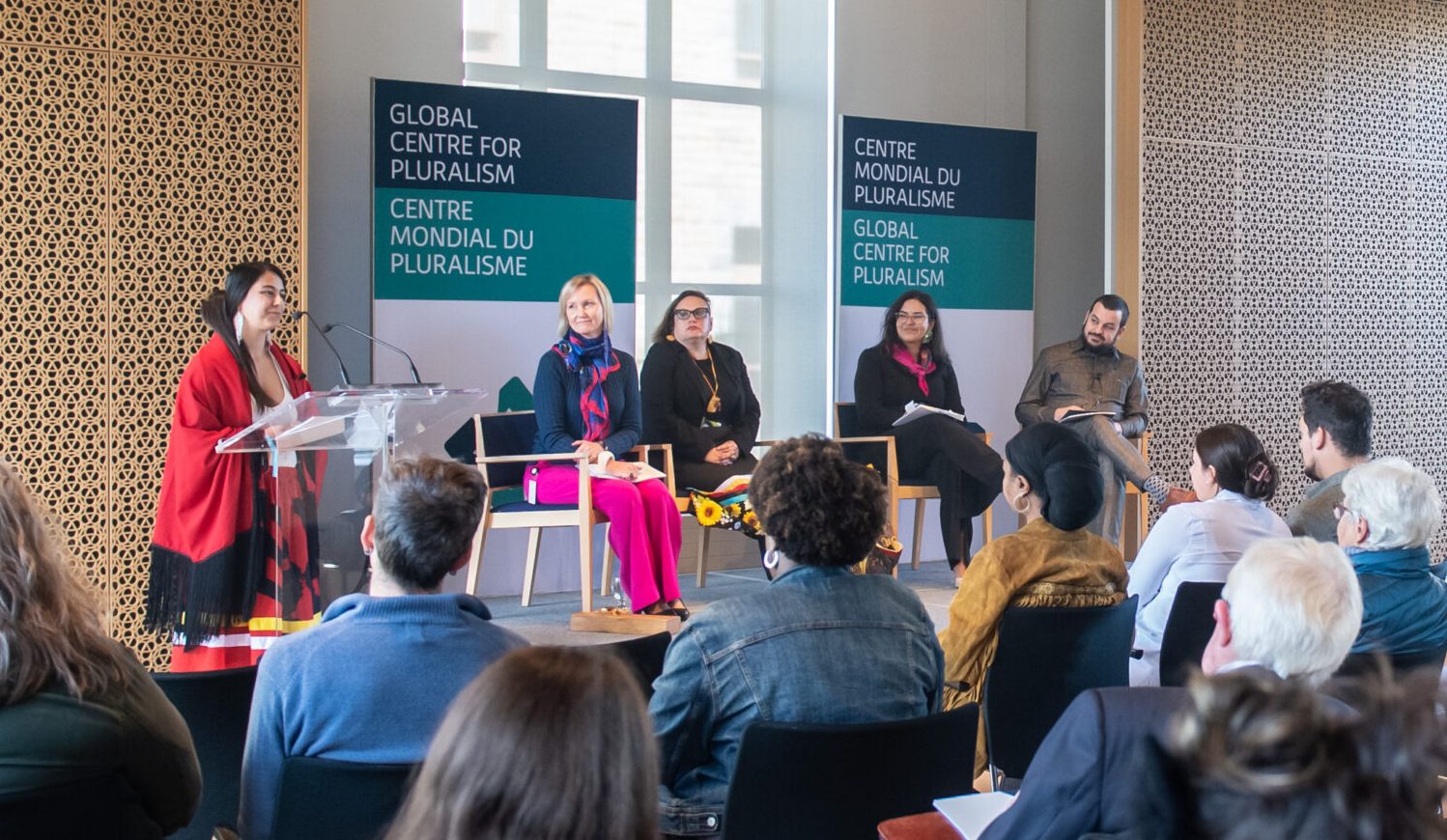
The Global Centre for Pluralism is an independent, charitable organization founded as a partnership by the Government of Canada and Prince Karim Al-Hussaini Aga Khan IV.
When our differences are respected and valued, our societies thrive. Around the world, those that centre the respect, dignity and belonging of all people are more peaceful, prosperous and just. This requires deliberate actions on the part of all members of society – individuals, communities, institutions and governments.
The Centre works to influence perspectives, inform policies and inspire actions to advance pluralism. To do this, we work with policymakers, educators and community leaders around the world to amplify and implement the transformative power of pluralism, and to apply this in their work through a range of programs.
Our Programs
Global Analysis
Helping leaders understand the challenges and opportunities, we develop applied research and tools to measure societies’ treatment of diversity and track trends to support the implementation of more inclusive policies and practices around the world
Educating for Pluralism
Recognising the importance of leadership in advancing pluralism, we support educators to advance pluralism within the classroom and throughout educational systems and institutions
Leaders for pluralism
Through celebrating and supporting the work of pluralism champions globally we inspire actions towards pluralism and build networks of support to leaders in different contexts
Peace and Conflict
Pluralism is most needed, and often hardest to apply, in situations of extreme conflict. We support peace practitioners to apply a pluralism lens in their work in peace processes around the world
What is Pluralism?
In diverse societies, making choices to engage positively with difference leads to stronger outcomes for all. Each of our societies faces unique dilemmas of how to engage with difference. The core goal of a pluralist society is one where all members of the society feel that they belong and are respected, and in turn respect one another.
Pluralism requires intentional efforts in our policies and practices to ensure that dignity and respect for all individuals are central to our systems, including governance, media, the private sector, education, and civil society.
This is an historically difficult time for pluralism, with polarization and division on the rise. Societies worldwide are being challenged to address injustice and exclusion, and to balance competing perspectives and values. Pluralist approaches can help to address these dilemmas in a way that supports belonging for all.
Engaging with our differences is essential. Belonging is the goal.
In diverse societies, people with different identities and viewpoints must find ways to live together. The work of pluralism is to find a balance between different perspectives and values. Institutional mechanisms can help to address competing values, but pluralism is not created by institutions alone. The content of institutional choices is influenced by the society and the people that make it up.
The goal of pluralism is belonging. Building inclusive societies requires both institutional responses (“hardware”) and behavioural change (“software”) to ensure that every person is recognized and feels they belong.
How do we work?
We aim to embody pluralism in who we are and everything we do. We recognise that pluralism is a set of complex actions in each society, unique to that context, that evolve and change over time. We recognise that there is not a single “response” to building belonging in a society. Therefore, we do not come with a “solution”, but rather a frame of enquiry that will open up new opportunities to assess and understand social challenges in each context.
We develop deep partnerships with leaders in different societies, knowing that they will have the best sense of how to advance pluralism in their own circumstances. We bring comparative perspectives and ideas, research and framing, but root this in the leadership of those within a given society.
We strive to be creative and to take risks, to be highly professional and committed to quality. We are committed to learning and collaboration with partners and adapting and evolving as we continue to learn. We recognise the tensions and dilemmas inherent to our work and embrace the discomfort that comes with this. This is necessary to achieving transformational results.
Governance
Learn more about the Centre’s leadership, team, and the plans and reports that guide our work.

Board of Directors
The Centre is governed by an international Board of Directors chaired by His Highness the
Aga Khan.
Our People
The Centre’s operations are supported by a small team headquartered in Ottawa, Canada.
Annual Reports & Corporate Plans
Bilingual reports are submitted to the Government of Canada on a yearly basis outlining the Centre’s plans and priorities.